
DataHive AI

AI • Data Analysis
Decentralized AI data collection platform

BNB Attestation Service (BAS) is a powerful infrastructure protocol that provides the native verification and reputation layer for the BNB Chain ecosystem. Built to meet the increasing need for trust in Web3, BAS enables composable identity, KYC, and asset attestations that can be verified both on-chain and off-chain. This foundational layer serves a vital role in areas such as DeFi, real-world assets (RWA), and AI agents by offering scalable, privacy-preserving proof systems.
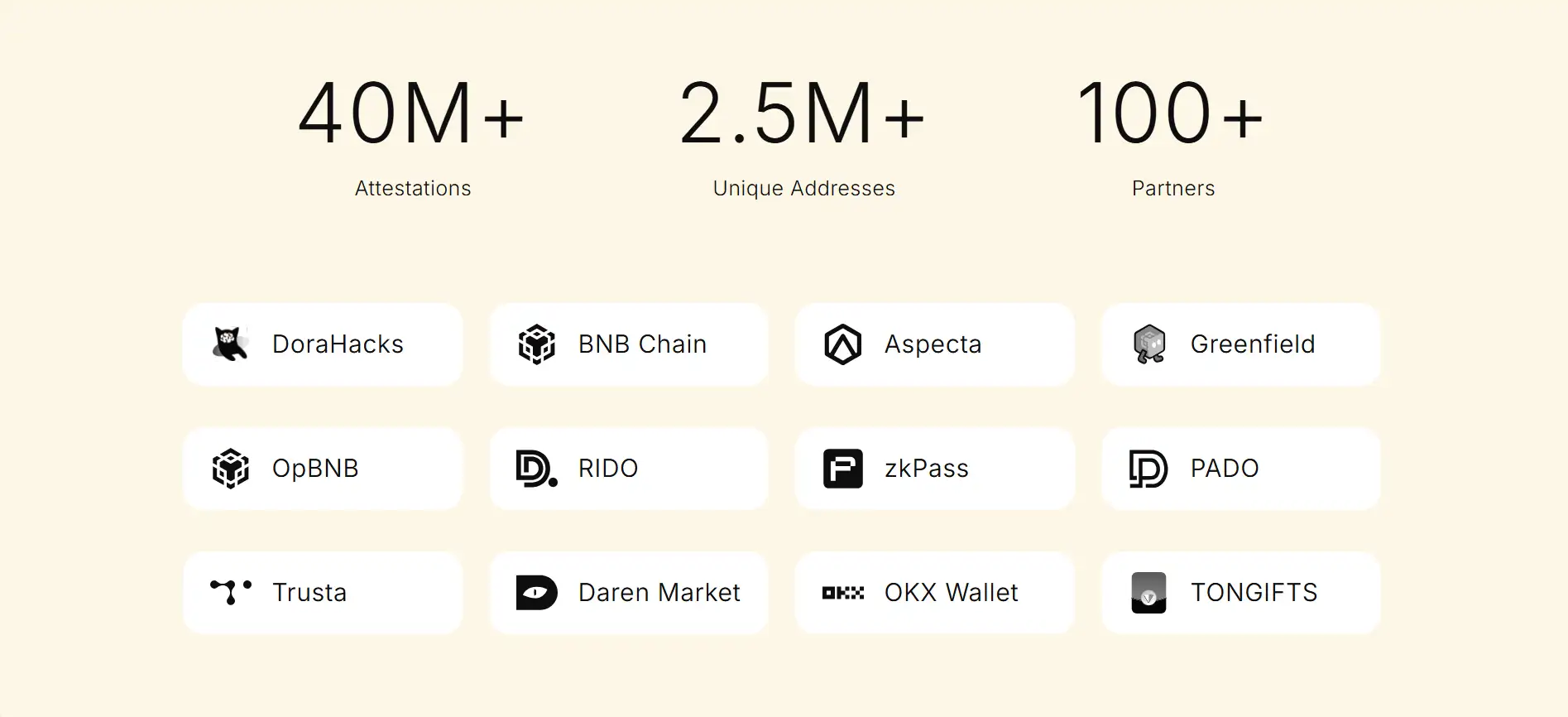
The goal of BAS is to enable a new class of dApps that can rely on verified claims without compromising decentralization or data privacy. With more than 40 million attestations and over 2.5 million unique addresses interacting with the platform, BAS is gaining rapid traction across the BNB Chain ecosystem and beyond. By leveraging both on-chain mechanisms and decentralized storage (via Greenfield), BAS empowers users to control how, when, and with whom their data is shared.
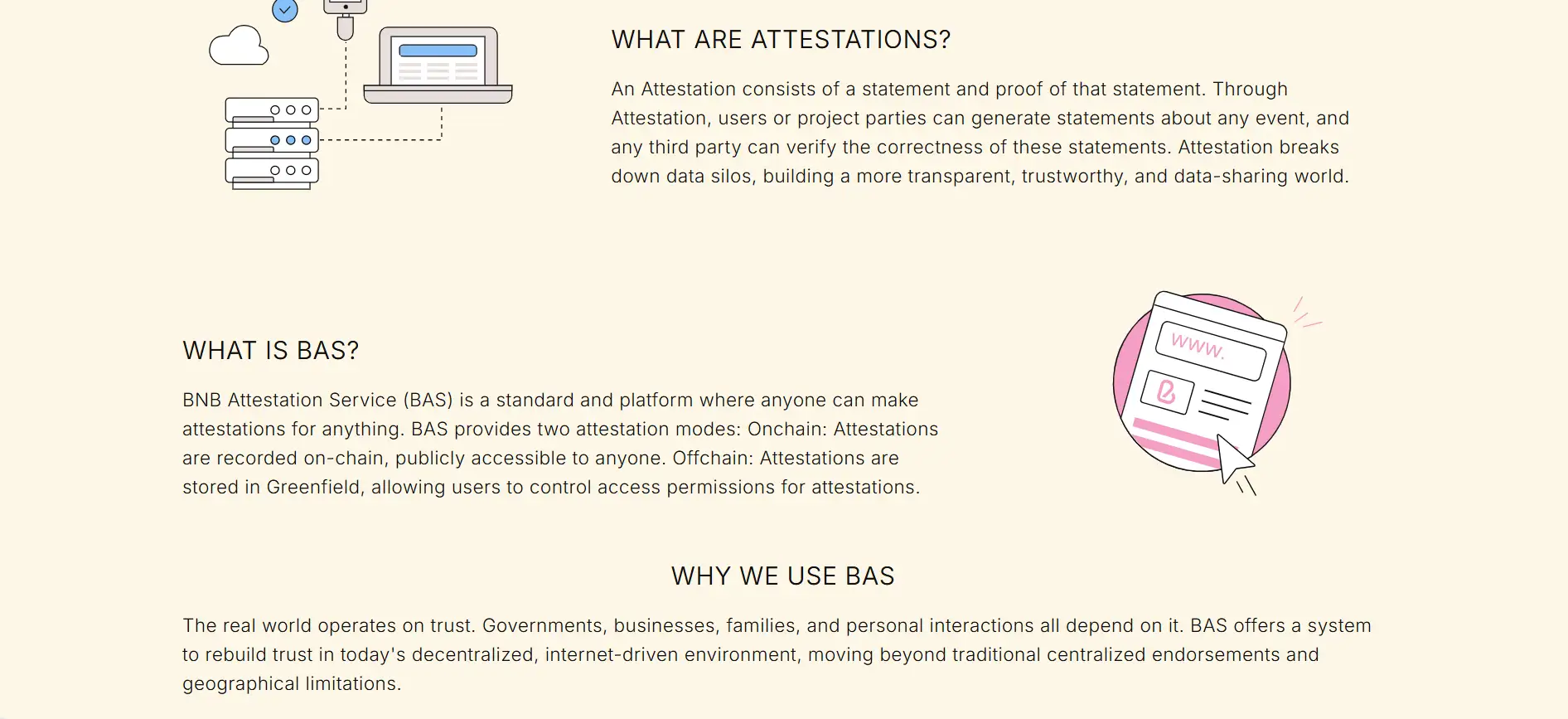
BNB Attestation Service (BAS) is a foundational protocol designed to solve one of the most persistent challenges in Web3 — verifiable trust. While blockchains are excellent at storing immutable data, they inherently lack the ability to verify external information. BAS addresses this limitation by introducing a framework where users, institutions, or dApps can generate attestations about any data point — whether it's related to identity, asset ownership, reputation, or more.
BAS introduces two attestation modes: on-chain, where attestations are public and verifiable by anyone; and off-chain, where data is stored in BNB Greenfield, enabling permissioned access and preserving data privacy. This flexibility is what makes BAS a core layer for emerging use cases like Decentralized ID (DID), DataFi, and even reputation frameworks for autonomous AI agents.
What sets BAS apart is its highly composable architecture. Developers can define their own attestation schemas, integrate attestations into their dApps using the BAS JS SDK, and utilize BAS as a plug-in trust layer. This approach enables interoperable, verifiable data sharing across DeFi, RWA marketplaces, and identity-focused platforms.
Major partners including DoraHacks, Aspecta, OpBNB, and zkPass highlight its adoption across diverse sectors. As a key building block of the BNB Chain ecosystem, BAS is redefining how trust and identity are handled in decentralized applications.
Competitors in the attestation and decentralized identity space include Proof of Humanity, and Veramo. However, BAS’s tight integration with BNB infrastructure and its support for both on-chain and off-chain attestations make it uniquely powerful in enabling trust-centric dApps.
BAS provides numerous benefits and features that are vital for building trust infrastructure in Web3:
BAS makes it easy for developers, users, and projects to start building or verifying attestations within the BNB ecosystem. Follow these steps to get started:
BAS replaces centralized, one-time KYC verification with a composable, Web3-native attestation layer. Instead of storing private user information in a silo, users create verifiable claims about their identity, activity, or credentials. These attestations can be stored on-chain for transparency or off-chain via Greenfield for privacy. This means users retain ownership of their data and can selectively disclose it to third parties without re-verifying every time.
Yes, BAS is designed to support the future of decentralized AI by enabling verifiable attestations for autonomous agents. Developers can generate proof-based statements about AI behavior, such as data sourcing, model updates, or execution of logic. These attestations are then verifiable by other smart contracts or platforms, creating a trust layer for AI agents operating within decentralized systems.
Off-chain attestations in Greenfield are stored in a decentralized storage network where the user holds the access keys. This enables users to maintain full ownership of their data and decide who can view or verify the attestation. Unlike public blockchains, these attestations aren’t exposed unless explicitly shared, offering a privacy-preserving solution for sensitive information like KYC, credentials, or institutional verifications.
Developers can integrate BAS using the official JavaScript SDK and smart contract modules. They can define custom schemas, attach resolvers, and generate attestations tied to their app’s logic. Whether it's verifying user identity, on-chain behavior, or off-chain assets, BAS provides the infrastructure and APIs to plug trust verification directly into smart contracts or frontend applications.
BAS powers the shift toward DataFi — where data becomes a tradable, ownable asset. Users can create attestations about real-world achievements, certifications, contributions, or productivity metrics, and use them across dApps. These attestations can act as credentials in work networks, yield mechanisms, or even governance voting rights. By enabling the assetization of data, BAS becomes the core reputation layer for tokenized human and AI productivity.