
DataHive AI

AI • Data Analysis
Decentralized AI data collection platform


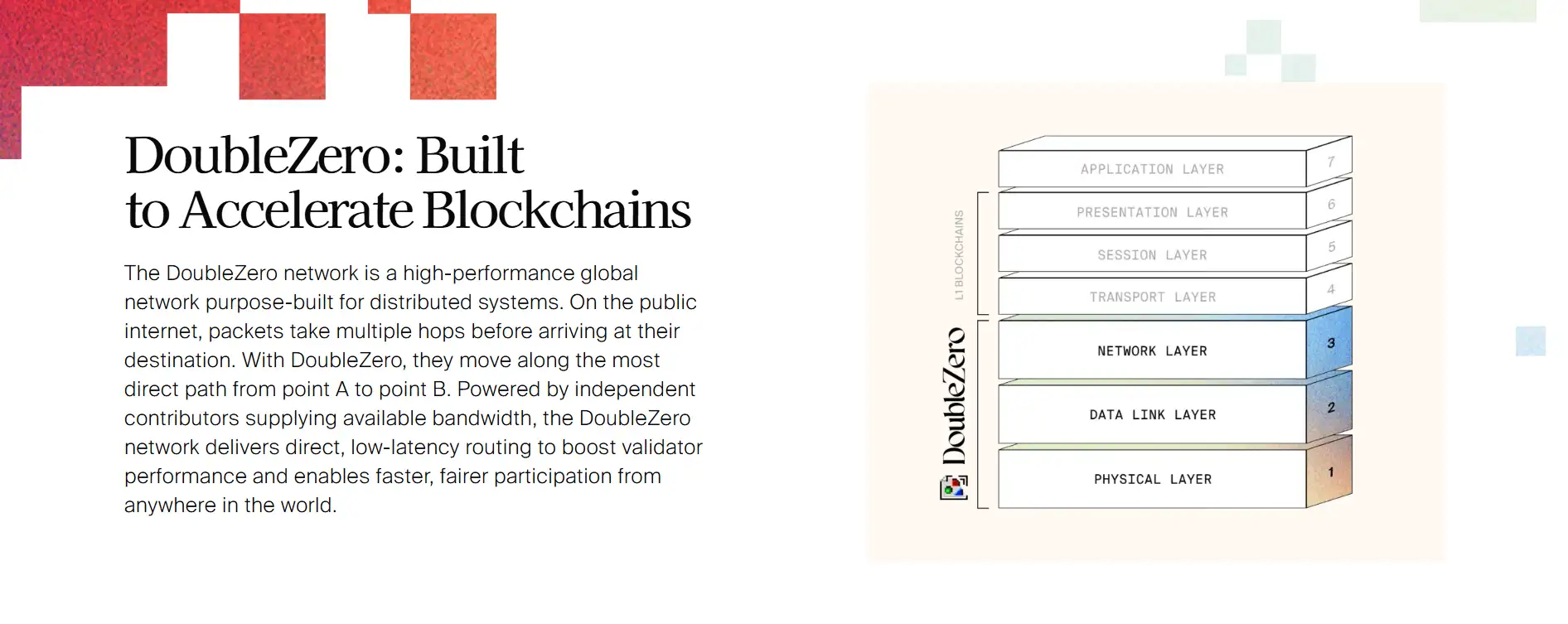
DoubleZero is a decentralized high-performance networking infrastructure purpose-built for blockchain and distributed systems. Unlike the public internet—which routes traffic through unpredictable and congested pathways—DoubleZero enables direct, low-latency, and efficient routing by leveraging unused private bandwidth supplied by independent contributors. The result is a global network capable of accelerating transaction propagation, reducing jitter, and improving synchronization across validator nodes.
Through seamless integration and zero reliance on complex configurations like BGP, DoubleZero is redefining how blockchains handle data transmission. With validator performance as a core priority, it enables systems to bypass the limitations of the public internet and join a mesh of dedicated fiber routes and edge-level processing. Already trusted by over 400 validators, including Galaxy, Everstake, and Staking Facilities, DoubleZero is setting a new standard in validator infrastructure.
DoubleZero was created as a response to the networking bottlenecks faced by modern decentralized systems. Traditional internet routing involves multi-hop pathways and exposure to congestion, latency, and jitter—conditions that reduce the effectiveness of validator operations and decentralized applications. DoubleZero solves this by creating a private, performance-optimized alternative to public internet infrastructure, specifically for blockchain validators, RPC providers, and distributed systems.
The network is powered by independent contributors who offer surplus private fiber bandwidth and infrastructure such as switches and FPGA devices. These contributors are incentivized via the 2Z token to integrate their resources into the DoubleZero mesh network. Validators or users gain access to the network after verifying their identity through ledger-based authentication—ensuring a secure and verifiable method of onboarding. This setup enables both horizontal scalability and decentralization, which are crucial to blockchain resilience.
Core performance improvements include direct packet routing for outbound messages, edge filtration to eliminate spam and duplicates before data reaches the user, and multicast support for simultaneous broadcast to multiple clients. In contrast to relying on costly and complex infrastructure setups, DoubleZero integrates with multiple validator clients and requires minimal networking expertise—making it accessible even for solo validators. Key collaborators in the ecosystem include JumpCrypto, RockawayX, Distributed Global Technologies, and Cherry Servers.
As of Mainnet-Beta, DoubleZero has launched globally with live validator telemetry available via its Network Performance Dashboard. Compared to traditional infrastructure providers and decentralized bandwidth protocols like Pocket Network, DoubleZero focuses specifically on validators and high-frequency blockchain data transmission. This niche focus has led to its adoption by performance-sensitive chains like Solana, as publicly endorsed by its co-founder.
DoubleZero delivers a set of performance-focused features that differentiate it from public internet infrastructure and other decentralized networking projects:
DoubleZero is built for easy deployment and high performance. Here’s how to get started:
$ doublezero connect ibrl to provision your connection.
DoubleZero enhances validator performance by routing traffic over a dedicated, high‑performance global network instead of relying on the congested public internet. Validators connected to DoubleZero benefit from direct point‑to‑point paths that significantly reduce latency, jitter, and unnecessary network hops. This leads to faster block propagation, improved message delivery, and higher competitiveness in validator rankings. The network’s optimized routing logic ensures that outbound packets reach other nodes more quickly, offering a measurable edge in fast‑paced ecosystems like Solana and other high‑throughput blockchains.
Independent contributors supply private fiber bandwidth, switches, and specialized hardware to expand the DoubleZero network. By integrating their underutilized capacity through the DoubleZero protocol, they help create a global mesh of optimized routing paths. In return, contributors earn 2Z token incentives for their participation. This decentralized model allows DoubleZero to scale without relying on traditional data centers, while also ensuring the network maintains resilience, diversity, and high availability across multiple geographic regions.
Low latency is essential for blockchain validators because it determines how quickly they can transmit and receive blocks, transactions, and consensus messages. Even millisecond‑level delays can affect reward opportunities, leader selection, or slot confirmations on high‑performance networks. DoubleZero addresses this need by offering direct, latency‑optimized routing that bypasses public internet congestion. Through hardware‑level advantages and bandwidth‑first design, validators on DoubleZero achieve faster synchronization and reduced variance in message timing, enabling more equitable participation in decentralized consensus.
DoubleZero uses ledger‑verified authentication for onboarding validators. Instead of accounts or passwords, validators verify their identity through their blockchain public key. This ensures that only legitimate node operators gain access to the high‑performance network. After this verification, the system provisions routes and bandwidth through a streamlined CLI workflow—such as running doublezero connect ibrl. This process, documented on DoubleZero Docs, keeps the network permissioned yet decentralized, preserving both security and performance integrity.
Yes. DoubleZero is designed for simple integration and does not require specialized networking expertise such as BGP configuration or custom routing setups. The platform supports multi‑client validator environments, RPC infrastructure providers, and MEV systems through a straightforward CLI‑based setup. Users follow guided steps in the Documentation Portal, making it accessible for solo validators and large providers alike. The system’s default optimizations ensure that once connected, validators automatically benefit from low‑latency routing, multicast support, and future features like edge filtration.