DataHive AI

AI • Data Analysis
Decentralized AI data collection platform

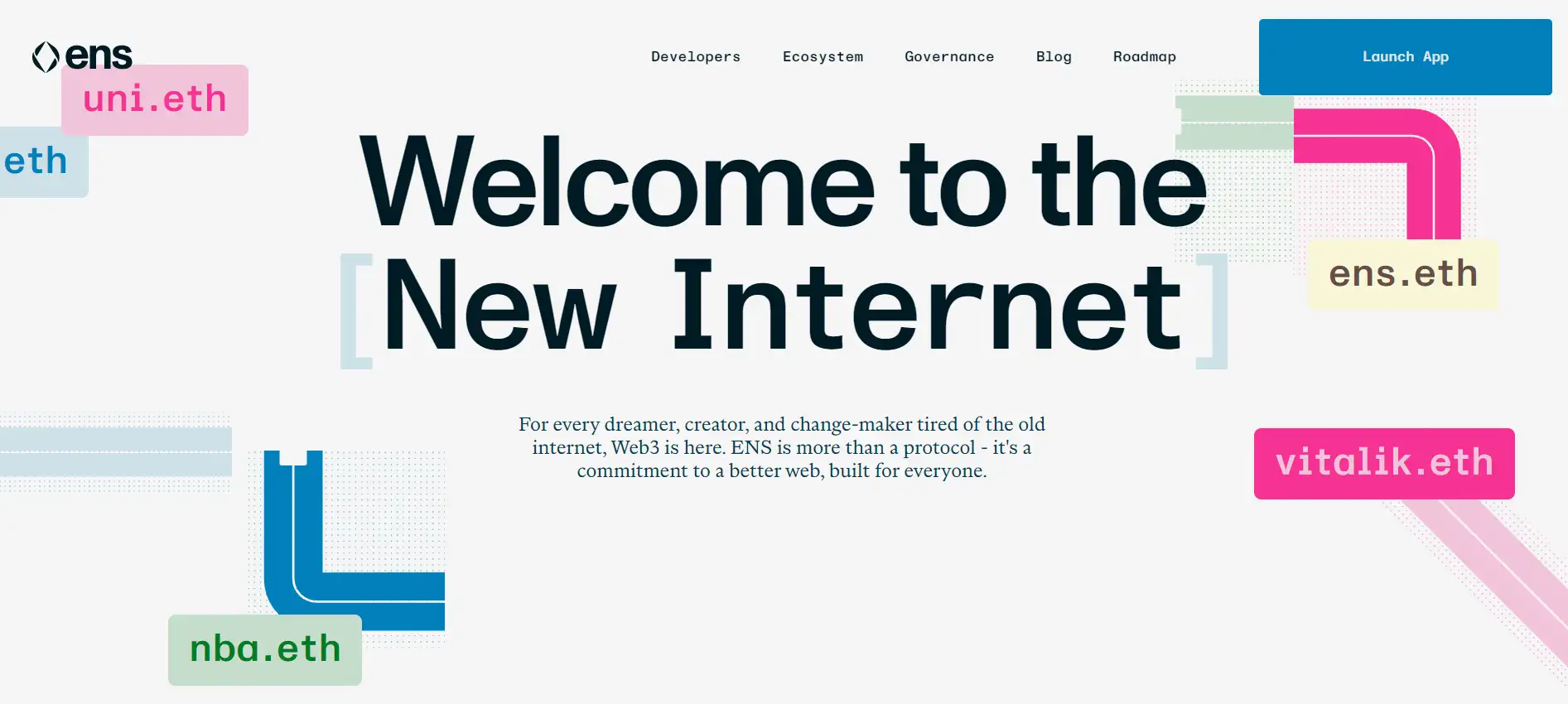


Ethereum Name Service (ENS) is a revolutionary decentralized naming system that simplifies blockchain interactions by replacing complex, alphanumeric wallet addresses with human-readable names like "example.eth." This innovation addresses one of the most significant barriers to blockchain adoption—usability—by enabling users to manage their digital identities seamlessly. Built on the Ethereum blockchain, ENS leverages the principles of transparency, security, and decentralization to provide users with full ownership and control of their domain names without the need for centralized authorities. This positions ENS as a critical piece of infrastructure in the rapidly expanding Web3 ecosystem.
ENS is governed by the ENS DAO, a community-driven organization that oversees its development and ensures the protocol remains aligned with its core values of decentralization and inclusivity. Over the years, ENS has seen widespread adoption, with support from major wallets like MetaMask and Coinbase Wallet, as well as integration with countless decentralized applications (dApps). By transforming how users interact with blockchain technology, ENS continues to play a vital role in advancing Web3 adoption and enhancing usability across the ecosystem.
The Ethereum Name Service (ENS) is a decentralized, open-source naming protocol designed to map human-readable names, such as "example.eth," to machine-readable identifiers like Ethereum wallet addresses, smart contract addresses, and content hashes. Launched in 2017, ENS has become one of the most trusted and widely used protocols in the Ethereum ecosystem. Its core architecture includes two primary components: the ENS Registry and resolvers. The registry is a smart contract that records domain ownership and subdomain structures, while resolvers associate each domain with resources, such as wallet addresses or metadata, enabling efficient and seamless functionality.
One of the defining moments for ENS came in 2021, with the transition to a decentralized governance model through the formation of the ENS DAO. This shift empowered community members to participate directly in decision-making processes, ensuring the protocol remains decentralized and community-driven. Since then, ENS has become a cornerstone of Web3 infrastructure, boasting widespread integration across leading wallets, decentralized exchanges, and applications. Its ability to seamlessly integrate with wallets such as MetaMask and Coinbase Wallet has helped establish its dominance in the decentralized naming space.
ENS competes with platforms like Unstoppable Domains and Bonfida, both of which offer blockchain-based domain name solutions. However, ENS's strong foundation in the Ethereum network, extensive ecosystem support, and commitment to decentralization have made it the go-to choice for many blockchain enthusiasts. One of its standout features is its interoperability: ENS allows users to associate their names with other blockchain addresses, making it a highly versatile tool in the multi-chain world of Web3.
Additionally, ENS supports the creation of subdomains, enabling individuals, organizations, and businesses to create custom namespaces under their primary ENS domains. This feature is particularly useful for branding, communities, and personalized identity management. With advanced capabilities like metadata storage and support for text records, ENS domains can also be used to include details such as social media profiles, email addresses, or IPFS-hosted content. These functionalities extend its utility beyond financial transactions, positioning ENS as a foundational component for decentralized identity management and Web3 applications.
By focusing on scalability, usability, and interoperability, the Ethereum Name Service continues to lead the decentralized naming space. Its community-driven governance, strong technical foundation, and ability to address critical usability challenges ensure it remains a vital tool for the adoption of blockchain technology and decentralized applications.
The Ethereum Name Service (ENS) offers numerous benefits that set it apart as a leading decentralized naming protocol:
Getting started with Ethereum Name Service (ENS) is straightforward and requires just a few steps:
The Ethereum Name Service (ENS) has implemented a transparent system to address disputes over domain ownership. The ENS DAO, which governs the protocol, ensures that domain ownership is based on clear registration rules. Users who encounter disputes can submit them to established arbitration frameworks such as the ClearOS arbitration system. This approach ensures fairness and aligns with the decentralized ethos of the project.
Yes, you can easily transfer your ENS domain to another wallet by using the ENS Manager tool. After logging into the ENS interface, you can navigate to your registered name, select the "Transfer" option, and enter the recipient's Ethereum address. Once the transaction is approved, the ownership will be updated on the blockchain, ensuring a secure and transparent transfer process.
The ENS platform supports interoperability by allowing users to associate their ENS domain names with blockchain addresses beyond Ethereum. For example, users can link their ENS name to addresses on Bitcoin, Binance Smart Chain, or other supported blockchains. This ensures that ENS domains serve as a universal identity across multiple chains, fostering a more interconnected Web3 ecosystem.
If your ENS domain expires, it enters a grace period during which the previous owner can renew it without losing ownership. If the domain is not renewed within this grace period, it becomes available for public registration again. The grace period and expiration rules ensure fairness and give users time to manage their domains responsibly.
Yes, ENS domains can be used to host decentralized websites. By linking an ENS domain to an IPFS (InterPlanetary File System) content hash, users can create and access censorship-resistant websites. This makes ENS domains a key tool for building and hosting decentralized content in the Web3 ecosystem.