
DataHive AI

AI • Data Analysis
Decentralized AI data collection platform

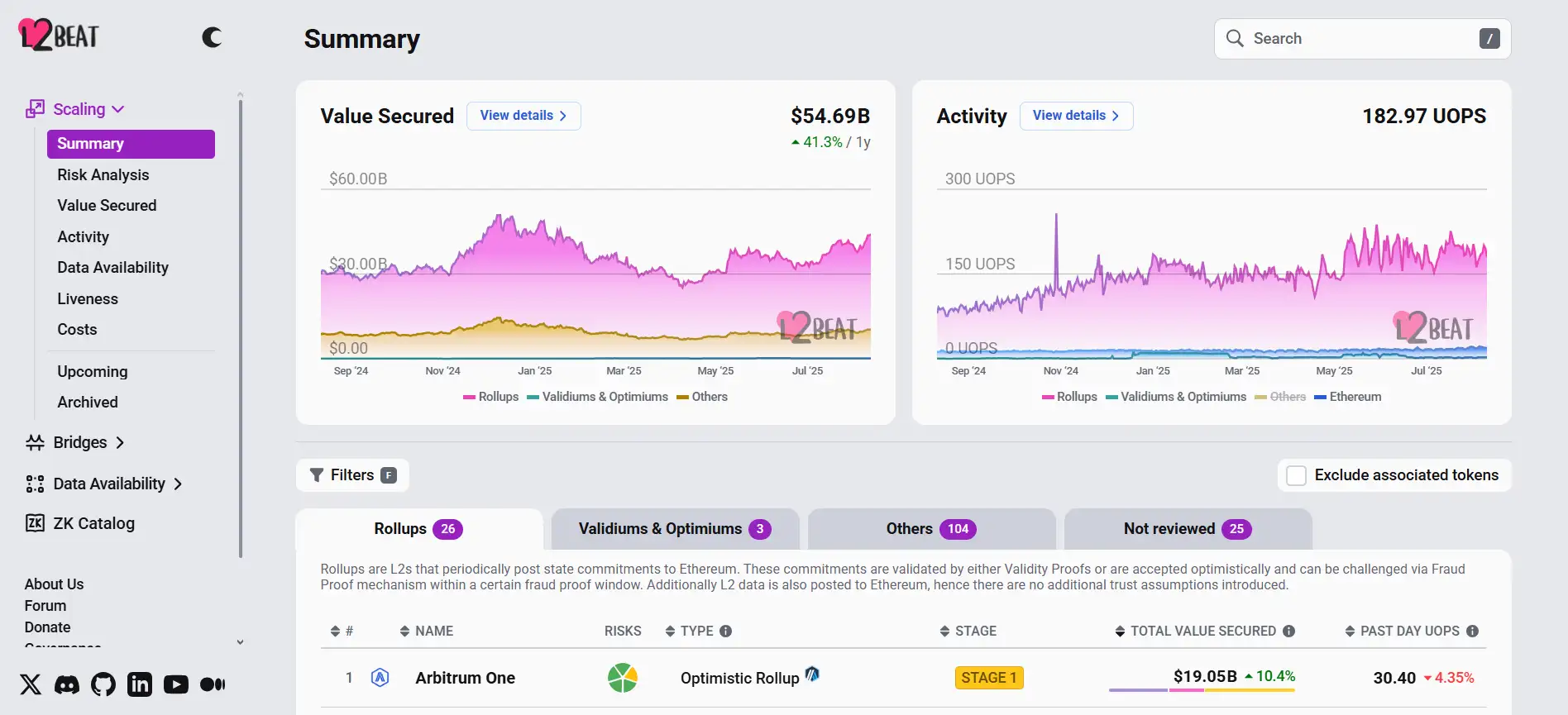
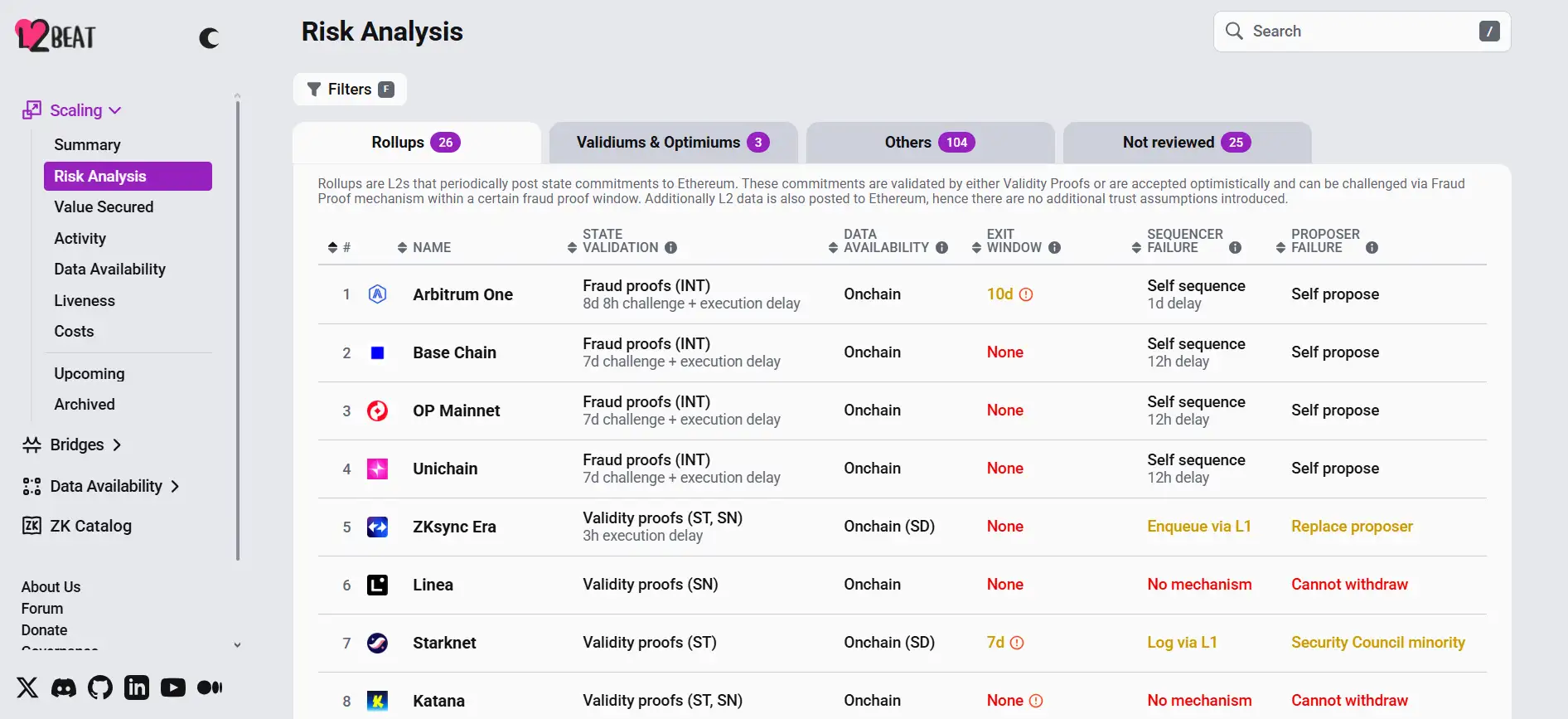
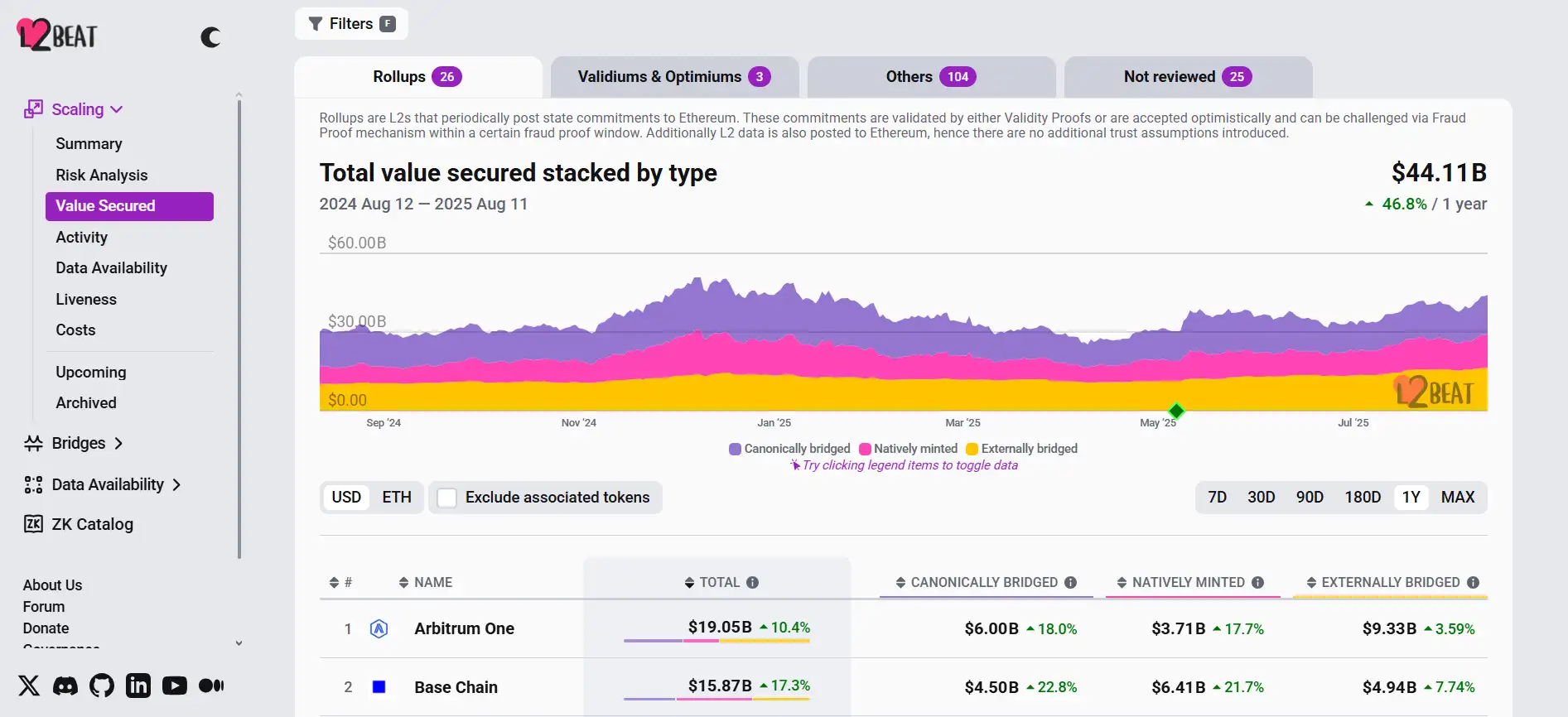
L2BEAT is a public goods organization and a leading Ethereum Layer 2 analytics platform committed to delivering onchain transparency and reliable data to the global blockchain community. Acting as an independent watchdog, L2BEAT provides accurate, unbiased insights into scaling solutions like rollups, validiums, and bridges. Its mission is to empower users to make informed decisions by publishing detailed research, monitoring security risks, and analyzing key metrics such as Total Value Secured (TVS), activity levels, and decentralization parameters.
What sets L2BEAT apart from generic blockchain trackers is its dedication to credibly neutral and fact-based reporting. It not only delivers raw data but also contextualizes it through in-depth risk analysis, governance insights, and real-time tracking of protocol upgrades. The platform is trusted by both individuals and institutions for its independence, commitment to security monitoring, and contributions to the Ethereum ecosystem’s public infrastructure. Through collaborations with entities like the Ethereum Foundation and Gitcoin, as well as its open-source ethos, L2BEAT continues to strengthen the trust and knowledge base around Ethereum’s scaling future.
L2BEAT was founded to address the lack of clear and verifiable information about Layer 2 scaling solutions on Ethereum. While other analytics platforms, such as DeFiLlama or Dune Analytics, focus on general DeFi metrics, L2BEAT specializes in tracking the security models, decentralization levels, and trust assumptions of L2 and L3 protocols. This specialized scope allows L2BEAT to provide deeper, more technically accurate assessments of how scaling solutions operate and evolve over time.
The platform meticulously tracks a wide range of protocols, including Optimistic Rollups like Optimism, Arbitrum One, and Base; ZK-Rollups such as zkSync Era, Starknet, and Polygon zkEVM; and “light” L2s like Validiums and Optimiums. For each protocol, it reports TVS, transaction throughput, upgradeability parameters, and governance structures. This data-driven approach is reinforced by its unique metric terminology—renaming “Total Value Locked (TVL)” to Total Value Secured (TVS)—to reflect that it measures all assets managed by the network, not just those in active DeFi use.
Beyond metrics, L2BEAT offers a comprehensive risk framework that analyzes how protocols derive their security from Ethereum (L1). This includes assessing whether they use Validity Proofs (zkProofs), Fraud Proofs, or alternative mechanisms, as well as evaluating their data availability solutions. The platform also monitors smart contract upgrades, as upgradability remains one of the main vectors for potential security breaches in scaling solutions. By identifying these risks, L2BEAT acts as a safeguard for the Ethereum community.
In addition to tracking projects, L2BEAT contributes to the ecosystem through research publications, participation in security councils, and development of explorer tools. Its open-source nature encourages community contributions, making it a collaborative knowledge hub. The project is financially supported by public goods organizations and private donors, ensuring its independence. Over time, this approach has positioned L2BEAT not just as an analytics platform, but as a trusted advisor in the journey toward a secure and scalable Ethereum network.
L2BEAT offers a unique set of benefits and features that make it an indispensable platform for understanding Ethereum scaling solutions:
L2BEAT is free to use and accessible to anyone interested in Ethereum scaling. Here’s how to get started:
The Total Value Secured (TVS) metric used by L2BEAT goes beyond the traditional Total Value Locked (TVL) by including canonically bridged assets, externally bridged assets, and natively minted tokens on a given Layer 2. This broader approach captures all assets managed by the network, whether or not they are actively engaged in DeFi. For example, if a user bridges ETH to an L2 but doesn’t deploy it into a protocol, it still contributes to TVS. This method ensures a more accurate representation of the network’s true economic weight, which is crucial for evaluating its security and adoption.
L2BEAT carefully tracks governance structures and upgradeability keys because these elements can directly impact security and user fund safety. Many Layer 2s remain upgradable, meaning that whoever controls the upgrade keys could, in theory, change core protocol logic or even redirect funds. By publishing who holds these keys and how control is distributed, L2BEAT helps the community assess decentralization levels and understand the risks associated with centralized control points.
L2BEAT distinguishes between “strong” Layer 2s, such as rollups that are trust-minimized, and “light” Layer 2s, like validiums and optimiums, which introduce additional trust assumptions. Through detailed risk profiles, security analyses, and data availability evaluations, L2BEAT gives users the tools to understand trade-offs in decentralization and security. This helps developers, investors, and end users choose solutions that align with their risk tolerance and technical requirements.
L2BEAT actively explains the importance of data availability in Layer 2 security by publishing accessible guides, visual dashboards, and in-depth reports. Without reliable data availability, users may be unable to prove asset ownership or exit to Layer 1 in a trustless way. By breaking down complex mechanisms—such as posting transaction data on Ethereum vs. external chains—L2BEAT helps the community understand how different approaches affect security guarantees and long-term resilience.
The independent research and transparent metrics provided by L2BEAT influence protocol development by highlighting security gaps, decentralization trade-offs, and upgradeability risks. Protocol teams often reference L2BEAT’s analyses when prioritizing improvements or transitioning toward trust-minimized designs. Additionally, ecosystem stakeholders—such as Ethereum governance bodies and public goods funders—use L2BEAT data to guide funding, partnership, and strategic scaling decisions.