
DataHive AI

AI • Data Analysis
Decentralized AI data collection platform

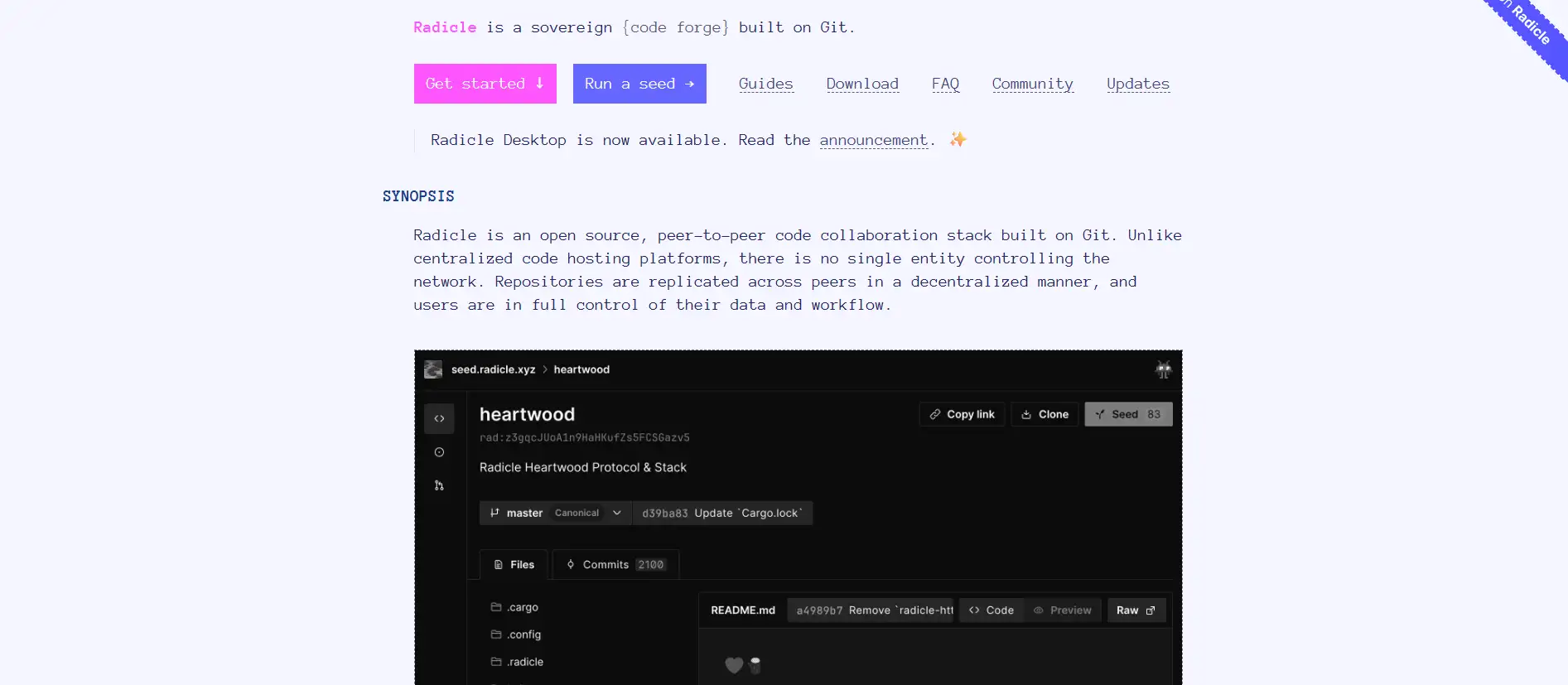
Radicle is a decentralized, peer-to-peer code collaboration network that reimagines software development without centralized intermediaries. Built directly on top of Git, Radicle enables developers to collaborate on code while retaining complete control over their data and workflow. By using cryptographic identities and a custom gossip protocol, it creates a resilient and sovereign environment for coding—where every contribution is signed, verified, and censorship-resistant.
Unlike conventional platforms like GitHub or GitLab, which rely on centralized servers and policies, Radicle replicates repositories across peers in the network. This design makes it local-first—repositories are fully functional even when offline—and ensures that no single point of failure can disrupt collaboration. Whether you're building open source tools or running a private project, Radicle offers an infrastructure where code and community can thrive in a secure, decentralized, and extensible ecosystem.
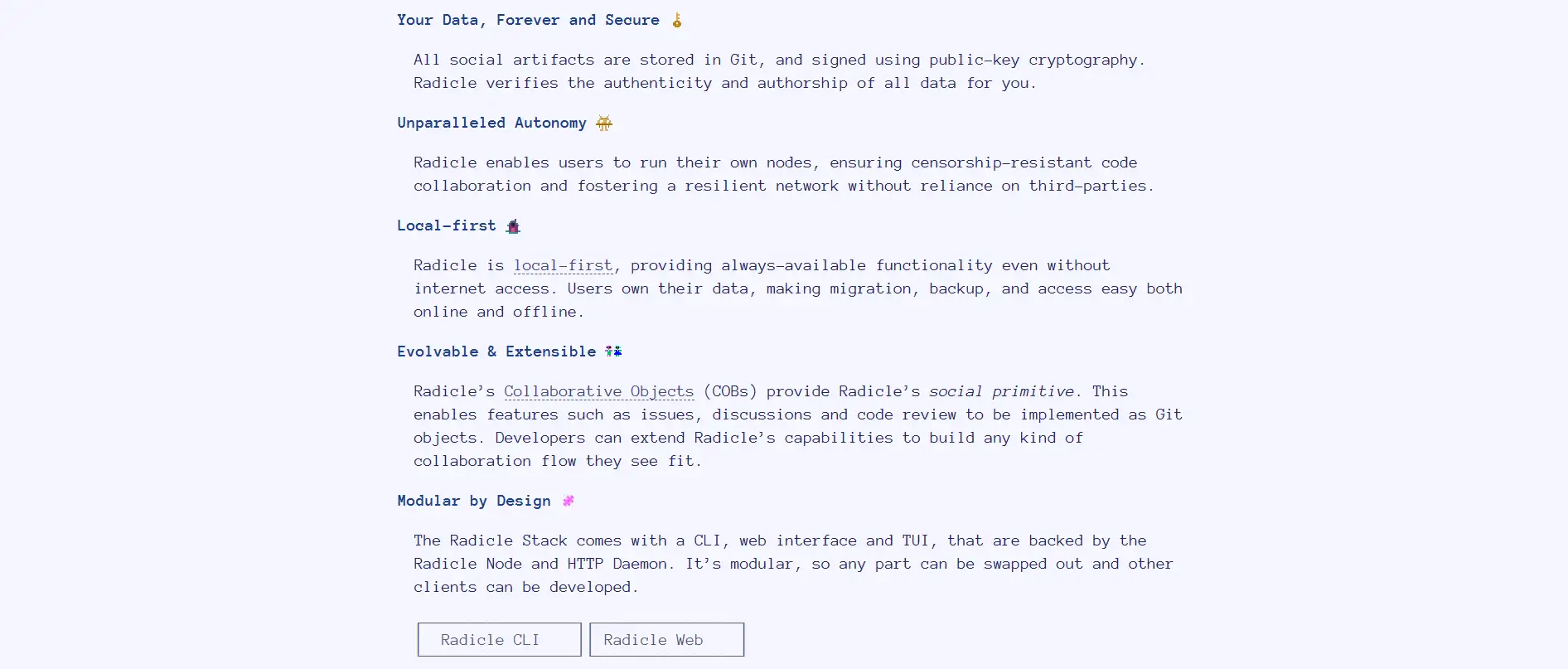
Radicle is a unique sovereign code forge that allows developers to collaborate directly over a decentralized network using Git. At its core, Radicle is a protocol that eliminates the need for centralized code hosting platforms by replicating repositories across peers. This architecture gives developers unparalleled autonomy, empowering them to control how their code is distributed, collaborated on, and preserved. All contributions are signed via public-key cryptography, ensuring authorship, traceability, and security.
The technology stack behind Radicle is both modular and powerful. It includes the Radicle Node, a CLI, a web interface, a desktop GUI, and an HTTP daemon. Together, they enable developers to manage code repositories with features such as issues, patches, discussions, and collaborative reviews—modeled as Git objects called Collaborative Objects (COBs). This structure allows for full extensibility; developers can build their own tools or extend the protocol to fit any collaboration flow.
The network employs a custom gossip protocol to share repository metadata efficiently between peers, allowing decentralized identity management and efficient data syncing. Notably, Radicle supports a fully local-first approach—repositories are accessible offline, giving developers complete independence from hosted servers. This offline-first paradigm also simplifies backup and migration while maintaining the same security and usability developers expect from modern platforms.
With privacy and sovereignty at its core, Radicle is especially relevant in today’s environment where software freedom, contributor rights, and data ownership are under threat. It’s built for developers who care about decentralization, censorship resistance, and verifiability. Licensed under MIT and Apache 2.0, Radicle is entirely open source and is maintained by an active community committed to reshaping the infrastructure of open source collaboration.
As a decentralized alternative to platforms like GitHub, GitLab, and Bitbucket, Radicle stands apart by removing intermediaries and building sovereignty into every line of code. Its open nature and zero-dependency design position it as a fundamental tool for developers, DAOs, and any organization seeking to future-proof their code infrastructure.
Radicle provides a powerful suite of features and benefits that distinguish it in the world of peer-to-peer code collaboration:
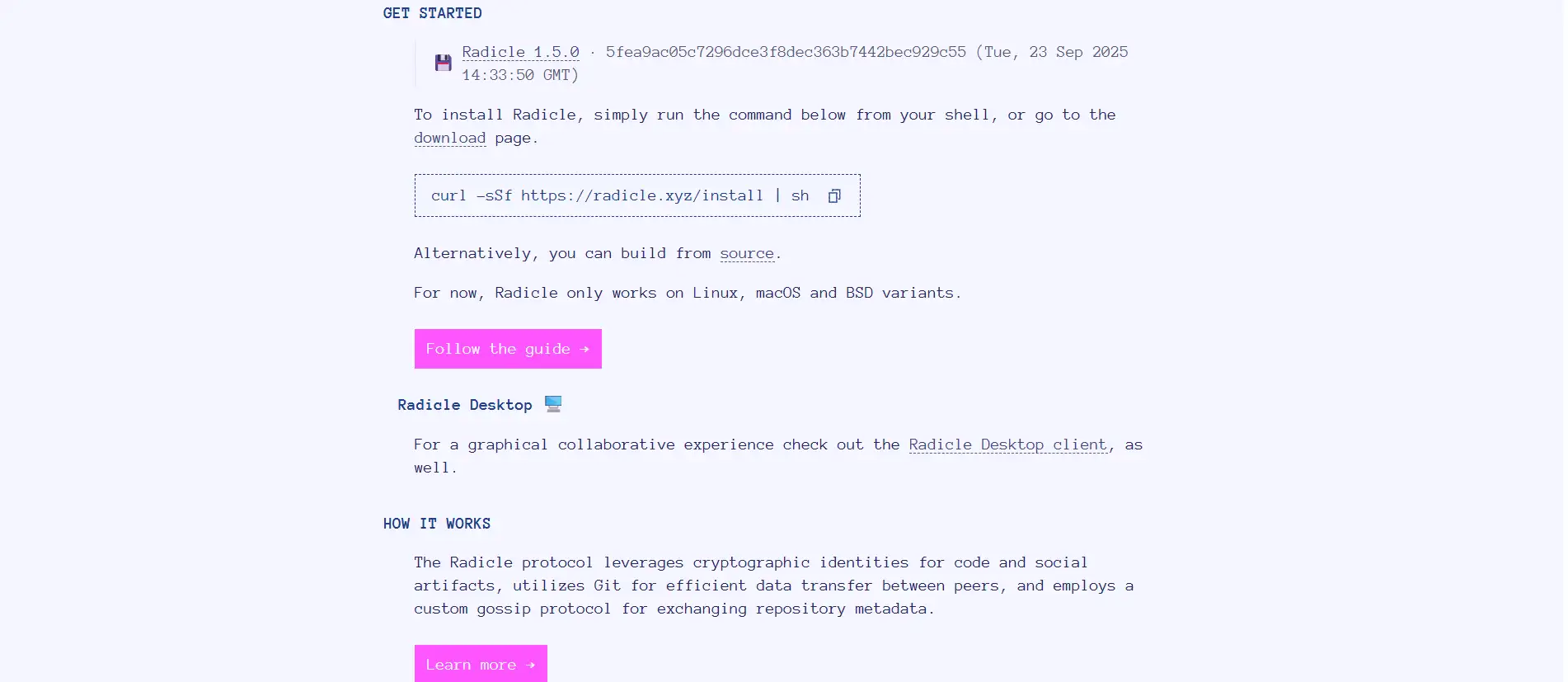
Getting started with Radicle is simple and flexible, whether you're a developer, contributor, or organization seeking decentralized infrastructure:
curl -sSf https://radicle.xyz/install | sh in your terminal or visit the Download page.
While self-hosting a Git server gives you control, Radicle removes the need for a server entirely. Its peer-to-peer architecture distributes your repository across multiple nodes, eliminating single points of failure and enabling offline collaboration. There’s no backend infrastructure to manage, no DNS or server downtime to worry about. Plus, with cryptographic identities, Radicle ensures authenticity and history verification, which a basic Git server lacks. Explore more at Radicle.
Yes. One of the most powerful aspects of Radicle is its ability to operate in isolated peer groups. You can set up your own Radicle Node and collaborate privately with trusted peers, using only your infrastructure. This makes Radicle a perfect fit for internal teams, DAOs, or communities seeking a sovereign development environment without giving up modern collaboration tools. Learn how to deploy at Radicle Guides.
Radicle is entirely local-first and login-free. It uses your machine’s cryptographic identity to sign contributions, and peers discover each other via a gossip protocol. There’s no need for email registration, centralized logins, or accounts. All your activity—commits, issues, discussions—is stored in Git objects and replicated across the network. This makes collaboration self-sovereign and censorship-resistant. Read how it works at Radicle.
Not at all. Because Radicle is local-first, all repositories are cloned to your machine and remain fully operational offline. You can still make commits, open issues, review patches, and more—all without an internet connection. Once you're back online, Radicle syncs changes with other peers automatically. This provides an always-available developer experience without being tethered to the cloud. Try it by downloading from Radicle.
Yes, Radicle can be used alongside traditional Git platforms. Developers often use Radicle for sovereign backup and secure collaboration, while mirroring code to GitHub or integrating it into existing CI/CD workflows. In fact, Radicle supports tooling that enables pushing to external remotes and can be used in conjunction with services like GitHub Actions.