
DataHive AI

AI • Data Analysis
Decentralized AI data collection platform

Radius is an Ethereum-focused infrastructure project building trust-centered solutions for onchain markets. Unlike traditional block builders operating in opaque, centralized environments, Radius delivers transparency, alignment, and resiliency at the protocol layer. Its mission is to transform the core of block construction—from transaction ordering to value capture—ensuring economic integrity and trust are embedded directly into the infrastructure.
By partnering with rollups, exchanges, and institutional actors, Radius coordinates block production and MEV interactions to enable open value flows across the Ethereum ecosystem. This coordination is achieved through its composable products such as Lighthouse and Secure Block Building (SBB), which connect fragmented markets and enforce fair ordering. Radius envisions a future where trust is not promised—but engineered—at the base layer of every block.
Radius is redefining how value is created, captured, and distributed across Ethereum by addressing a critical weakness in modern blockchain infrastructure: the trust gap in block building. While Ethereum promises decentralization, the systems that determine how blocks are built and which transactions get included often remain centralized, unaccountable, and closed off. Radius aims to close this gap by creating infrastructure where economic transparency and fair market access are defaults—not features.
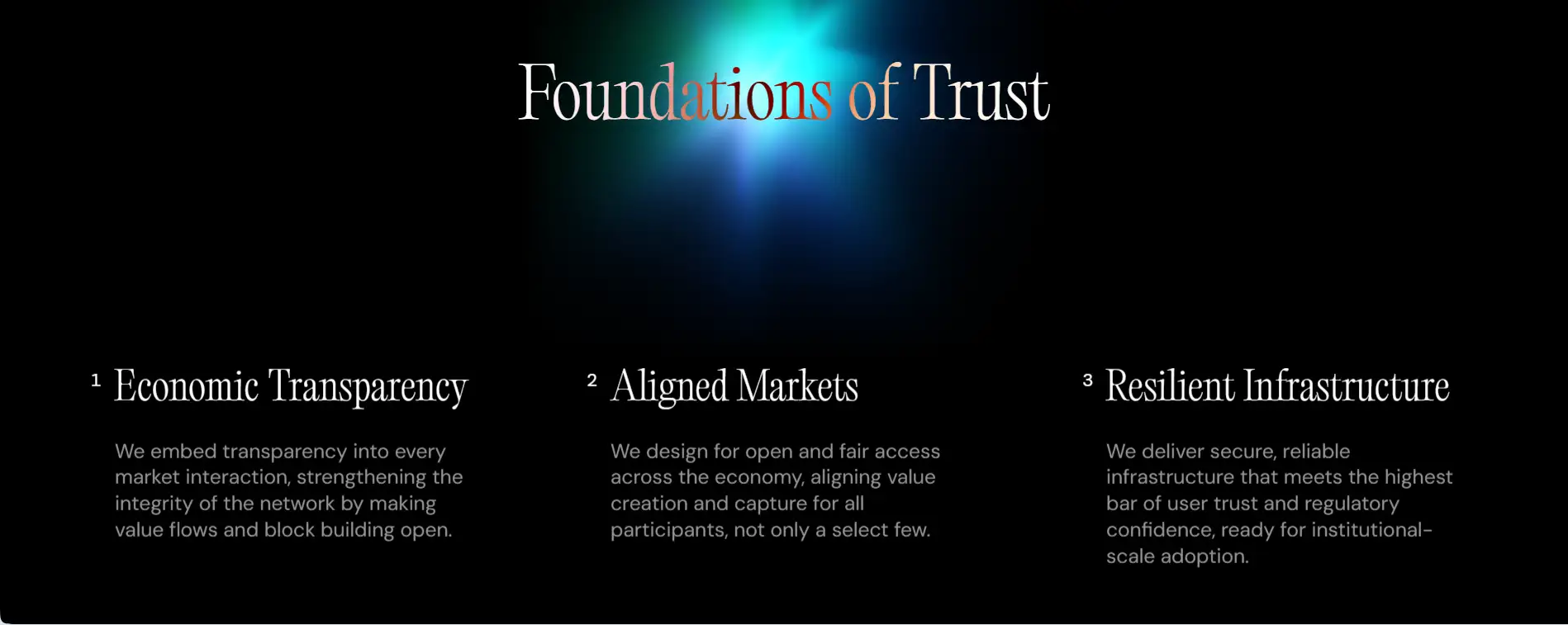
The core philosophy of Radius is built on three principles: economic transparency, aligned markets, and resilient infrastructure. By embedding clarity into every layer of the value flow—from MEV to cross-rollup arbitrage—Radius ensures that no actor, especially block builders, operates in the shadows. Instead, it fosters equitable participation for everyone in the network: rollups, users, validators, and liquidity providers.
Radius offers a suite of modular products designed to coordinate interactions across Ethereum’s increasingly fragmented market landscape. The first of these is Lighthouse, a coordination layer that synchronizes MEV opportunities across rollups, exchanges, and L1 Ethereum. Lighthouse connects these markets, enabling seamless, real-time arbitrage and reducing inefficiencies caused by isolation. Then there's Secure Block Building (SBB), which delivers deterministic, open block construction to eliminate preferential transaction ordering and manipulation.
Another defining characteristic of Radius is its focus on composability. Each component is designed as a modular building block that can plug into various rollups and chains. This allows the Ethereum ecosystem to integrate Radius infrastructure incrementally or at scale—empowering builders to opt into transparency and alignment without replacing their existing tech stack.
In contrast to opaque actors in the MEV and block builder space—such as traditional searchers or relay operators—Radius provides a fully auditable, public-facing infrastructure layer that builds legitimacy for Ethereum’s economic engine. Its approach differs significantly from other players like Flashbots, who pioneered MEV auctions but still operate centralized relays. Radius instead enables permissionless coordination without privileged roles or hidden incentives, making it a clear innovator in Ethereum’s economic trust stack.
Radius delivers a range of infrastructure features designed to make block building transparent, fair, and aligned with Ethereum’s long-term goals:
Getting started with Radius is designed for builders, rollups, and developers looking to implement trust-centric block infrastructure:
Radius tackles the centralization risks of traditional MEV systems by introducing Lighthouse, a decentralized coordination layer that facilitates cross-rollup arbitrage and fair opportunity discovery without relying on a single relay. Unlike solutions like Flashbots, Radius eliminates privileged actors and allows open participation in value flow coordination. Every MEV opportunity is exposed in a public and programmable format.
Yes. Radius is built to be modular and composable. Rollups can plug into products like SBB or Lighthouse without overhauling their infrastructure. This design allows for incremental integration and experimentation. Builders can choose which elements to adopt—such as secure block building or MEV coordination—based on their specific needs. Learn more at Radius.
Radius delivers Secure Block Building (SBB), a protocol for deterministic and predictable execution. It removes manipulation from transaction sequencing by enforcing rules that ensure equal access and visibility. This reduces preferential treatment and gives users, rollups, and applications confidence that blocks are constructed according to fair, transparent logic.
Radius is built with regulatory-grade transparency and economic integrity in mind. Its infrastructure enables provable audit trails, deterministic execution, and clear value flow mapping—all critical for institutions entering the blockchain space. Its commitment to open markets and trust-by-design make it a future-proof partner for rollups, exchanges, and enterprises. Learn more at Radius.
Radius is designed to be interoperable rather than exclusionary. It can complement existing builders by providing additional layers of coordination, visibility, and fairness. Builders can adopt Radius components to align with the ecosystem’s push toward decentralization while preserving performance. Radius enhances the current landscape rather than seeking to monopolize it.